
 |
| MEASLES VIRUS |
MEASLES is a viral
infection of the respiratory system, immune system, and skin caused
by a paramyxovirus of the genus Morbillivirus.[1][2]
MEASLES is highly
contagious—90% of people without immunity sharing space with an infected
person will catch it.[3]
MEASLES is an
airborne disease spread by coughing and sneezing, close personal contact or
direct contact with infected nasal or throat secretions.[4]
MEASLES infects the
mucous membranes, then spreads throughout the body.[4]
MEASLES remains
active and contagious in the air and on infected surfaces for up to 2 hours.[4]
MEASLES can be transmitted
by an infected person from 4 days prior to the onset of the rash to 4 days
after the rash erupts.[4]
MEASLES is one of the leading causes of death of children worldwide.[42]
MEASLES is a human disease and is not known to occur in animals.[4]
PREVENTION
Measles can be
prevented with the MMR (measles, mumps, and rubella) vaccine.[5]
- In 1954, John Franklin Enders and Thomas Chalmers Peebles isolated measles virus from an 11-year-old boy, David Edmonston.[7][25]
- Maurice Ralph Hilleman was an American microbiologist who developed over 36 vaccines.[6]
- He is credited with saving more lives than any other medical scientist of the 20th century.[10]
- While working at Merck, Hilleman developed the first successful measles vaccine.[8]
- Licensed vaccines to prevent the disease became available in 1963.[9]
Life-threatening
adverse reactions to the MMR vaccination (measles, mumps, and rubella)
occur in less than 1 per million vaccinations (<0.0001%).[11]
One dose of measles
vaccine is about 93% effective at preventing measles if exposed to the virus
and two doses is about 97% effective.[42]
Fully
vaccinated people who get measles (the 0.3%) are much more likely to have a milder
illness, and they are also less likely to spread the disease to other people,
including people who can’t get vaccinated because they are too young or have
weakened immune systems.[42]
Before the measles
vaccination program started in 1963, it is estimated that about 3 to 4 million
people got measles each year in the United States alone. Of those people, 400 to 500
died, 48,000 were hospitalized, and 4,000 developed encephalitis (brain
swelling) from measles.[13][42]
In 1980, before global vaccination programs, measles caused an estimated 2.6 million deaths each year.[5]
Accelerated immunization
activities have reduced global measles
deaths by ~75%, from an estimated 630 000 in 1990, to 544 200 in 2000 to 158 000 in 2011 to 145 700 in 2013 (mostly children under the age of 5).[5][12][16]
SYMPTOMS
An asymptomatic incubation
period occurs 9 to 12 days from initial exposure.[17]
10-12 days after
exposure to the measles virus, an infected person will experience a high grade fever lasting about 4 to 7 days.[5]
 |
| Koplik's spots |
INITIAL STAGE: runny nose, a cough, red and watery eyes, and
small white spots (Koplik's spots) inside the cheeks.[5]

The RASH usually
appears 2-3 days after the onset of illness.[18]
COMPLICATIONS
Children
younger than 5 years of age and adults older than 20 years of age are more likely
to suffer from measles complications,[5] which may include:
CORNEAL ULCERATION which can lead to corneal scarring.[19]
SWELLING OF THE BRAIN(encephalitis)[20][21]
- ~1 child out of every 1,000 who get measles will develop encephalitis which can lead to convulsions and leave the child deaf &/or mentally impaired.[5]
SEVERE DIARRHEA and
related dehydration
- Diarrhea is reported in less than 1 out of 10 people with measles.[5]
EAR INFECTIONS[22]
- Ear infections occur in about 1 out of every 10 children with measles, and can result in permanent hearing loss.[5]
SEVERE RESPIRATORY INFECTIONS such as pneumonia[23]
- ~1 out of every 20 children with measles gets pneumonia, the most common cause of death from measles in young children.[5]
For every 1,000 children who get measles, 1 or 2 will die from it.[5][15]
RISK FACTORS
Any NON-IMMUNE PERSON (who has not been vaccinated or was vaccinated but did not develop immunity)
can become infected.[5]
In populations with HIGH LEVELS OF MALNUTRITION, and a LACK OF ADEQUATE HEALTHCARE, mortality can be as high as 10%. In cases of measles involving complications, the rate may rise to 20–30%.[14][24][27][29]
In IMMUNOCOMPROMISED PERSONS, the fatality rate is approximately 30%.[25][27][28]
Persons with LEUKEMIA,[26] are at risk, regardless of immunization status.[27]
Measles poses several risks to women who are PREGNANT, including: miscarriage, stillbirth or pre-term delivery.[27][30]
VITAMIN A DEFICIENCY[27][31]
- Vitamin A supplements have been shown to reduce the number of deaths from measles by 50%.[5]
- A systematic review of trials into the use of Vitamin A, found no significant reduction in overall mortality, but it did reduce mortality in children aged under two years.[32-37]
MEASLES CASES &
OUTBREAKS
The CRITICAL COMMUNITY SIZE (CCS) is the minimum number of new hosts required before a disease dies out.[38]
The CRITICAL COMMUNITY SIZE (CCS) is the minimum number of new hosts required before a disease dies out.[38]
The CCS for measles is estimated to be 250,000-500,000, “based on both theoretical and empirical investigation."[39]
Measles ELIMINATION is defined as the absence of continuous disease transmission for 12 months or more in a specific geographic area.[40]
In the Region of the
Americas (North, Central and South America and the Caribbean), measles has been
eliminated; however, outbreaks continue to occur when the virus is imported from other countries (Africa, Asia, Europe, Oceania) where measles is present (endemic).[42]
2015: From January 1 to January 30, 2015, 102 people from 14 U.S. states were reported to have measles.[41] Outbreak linked to an amusement park in California
2014: Brazilian health authorities reported a significant increase in the number of cases as
compared to the same time period in 2013.[42]
2014: In the Philippines there is an ongoing outbreak
affecting Manila and other regions of the country.[42]
2014: Vietnam is
currently experiencing an outbreak; there have been a high number of measles
cases reported throughout the country since the beginning of 2014.[42]
2014: In China, health authorities reported a significant increase in the number of cases as compared to those reported in 2013.[42]
2014: In China, health authorities reported a significant increase in the number of cases as compared to those reported in 2013.[42]
2014: The U.S.
experienced 23 measles outbreaks, including one large outbreak of 383
cases, occurring primarily among unvaccinated Amish communities in Ohio.[41]
2013: The U.S.
experienced 11 outbreaks, 3 of which had more than 20 cases,
including an outbreak with 58 cases.[41]
2011: More
than 30 countries in the WHO European Region reported an increase in measles; France, in particular experienced a large outbreak.[41]
2008: The U.S. experienced
several outbreaks, including 3 large outbreaks. The increase in
cases in 2008 was the result of spread in communities with groups of
unvaccinated people.[41]
LINK TO THE WHO WORLDWIDE MEASLES STATS:
REPORTED MEASLES CASES & INCIDENCE RATES BY WHO MEMBER STATES 2013, 2014 AS OF JAN. 20, 2015
***
FIN

UPDATES
Measles Weakens The Immune System For Years DISCOVERMAGAZINE.COM MAY 7, 2015
Measles Vaccine Not Linked With Autism, Even in High Risk Kids LIVESCIENCE APRIL 21, 2015
U.S. Measles Tally For 2015 Now at 121 Cases SCIENCE NEWS FEB. 11, 2015
Autism community's leaders make it crystal clear: Vaccinations do not cause autism AMERICANHEALTHREVIEW.COM FEB. 11, 2015
Autism community's leaders make it crystal clear: Vaccinations do not cause autism AMERICANHEALTHREVIEW.COM FEB. 11, 2015
How Quickly Would Measles Spread If Too Few People Were Vaccinated [video] SCIENTIFIC AMERICAN MARCH 9, 2015
REFERENCES
[1] Chen, SSP; Fennelly, G; Burnett, M;
Domachowske, J; Dyne, PL; Elston, DM; DeVore, HK; Krilov, LR; Krusinski, P;
Patterson, JW; Sawtelle, S; Taylor, GA; Wells, MJ; Wilkes, G; Windle, ML;
Young, GM (31 January 2014). Steele, RW, ed."Measles". Medscape
Reference. WebMD.
[2] Caserta, MT, ed. (September 2013)."Measles". Merck
Manual Professional. Merck Sharp & Dohme Corp.
[3] "Measles Fact
sheet N°286".who.int. November 2014
[4]
http://www.who.int/mediacentre/factsheets/fs286/en/
[5] http://www.cdc.gov/measles/vaccination.html
[6] Offit PA (2007). Vaccinated: One
Man's Quest to Defeat the World's Deadliest Diseases. Washington, DC:
Smithsonian. ISBN 0-06-122796-X.
[7] Tyrrell, D. A. J. (1987). "John
Franklin Enders. 10 February 1897-8 September 1985". Biographical
Memoirs of Fellows of the Royal Society 33: 212–226. doi:10.1098/rsbm.1987.0008. JSTOR 769951. edit
[8] Offit PA (2007). Vaccinated: One
Man's Quest to Defeat the World's Deadliest Diseases. Washington, DC:
Smithsonian.ISBN 0-06-122796-X.
[9] "Measles
Prevention: Recommendations of the Immunization Practices Advisory Committee
(ACIP)". Centers for Disease Control and Prevention (CDC).
[10] Maugh, Thomas H. II (2005-04-13). "Maurice
R. Hilleman, 85; Scientist Developed Many Vaccines That Saved Millions of
Lives".Los Angeles Times.
[11] Njayou M, Balla A, Kapo E (1991).
"Comparison of four techniques of measles diagnosis: Virus isolation,
immunofluorescence, immunoperoxidase & ELISA". The Indian Journal
of Medical Research 93: 340–344. PMID 1797639.
[12]
Bartlett, M.S. (1957). "Measles periodicity and community
size". J. Roy. Stat. Soc. Ser. A (120): 48–70.
[13] Black FL (1966). "Measles endemicity
in insular populations; critical community size and its evolutionary
implications". Journal of Theoretical Biology 11 (2):
207–11.doi:10.1016/0022-5193(66)90161-5.PMID 5965486.
[14] Lozano R, Naghavi M, Foreman K, Lim S,
Shibuya K, Aboyans V, Abraham J, Adair T, Aggarwal R, Ahn SY, et al. (Dec 15,
2012). "Global and regional mortality from 235 causes of death for 20 age
groups in 1990 and 2010: a systematic analysis for the Global Burden of Disease
Study 2010". Lancet 380 (9859): 2095–128. doi:10.1016/S0140-6736(12)61728-0. PMID 23245604.
[15] "Complications
of measles". CDC. November 3, 2014. RetrievedNovember 7, 2014.
[16] Measles, World
Health Organization Fact sheet N°286. Updated February 2014
[17] Risk
of infection East and Southwest Asia (Report). Occucare
International. May 16, 2012. p. 6.
[18] "Measles".
[19] Fisher DL, Defres S, Solomon T (2014)."Measles-induced encephalitis". QJM.
Epub ahead of print.doi:10.1093/qjmed/hcu113.PMID 24865261.
[20] Yasunaga H, Shi Y, Takeuchi M, Horiguchi
H, Hashimoto H, Matsuda S, Ohe K (2010). "Measles-related hospitalizations
and complications in Japan, 2007-2008". Internal Medicine (Tokyo,
Japan) 49 (18): 1965–1970.doi:10.2169/internalmedicine.49.3843.PMID 20847499.
[21] Gardiner, W. T. (2007). "Otitis
Media in Measles". The Journal of Laryngology &
Otology 39 (11): 614.doi:10.1017/S0022215100026712.
[23] Baxby D (1997). "Classic Paper: Henry
Koplik. The diagnosis of the invasion of measles from a study of the exanthema
as it appears on the buccal membrane". Reviews in Medical
Virology7 (2): 71–4. doi:10.1002/(SICI)1099-1654(199707)7:2<71::AID-RMV185>3.0.CO;2-S.PMID 10398471.
[24] Sabella C (2010). "Measles: Not just
a childhood rash". Cleveland Clinic Journal of
Medicine 77 (3): 207–213.doi:10.3949/ccjm.77a.09123.PMID 20200172.
[25] "Vitamin
A".
[26] Enders JF, Peebles TC (1954).
"Propagation in tissue culture of cytopathogenic agents from patients with
measles". Proceedings of the Society for Experimental Biology and
Medicine. Society for Experimental Biology and Medicine (New York,
N.Y.) 86 (2): 277–86.doi:10.3181/00379727-86-21073.PMID 13177653.
[27] Perry RT, Halsey NA (May 1, 2004).
"The Clinical Significance of Measles: A Review". The Journal of
Infectious Diseases 189 (S1): S4–16.doi:10.1086/377712. PMID 15106083
[28]Ellison, J.B (1931). "Pneumonia in
Measles". 1931 Archives of Disease in Childhood 6 (31).
pp. 37–52.PMC 1975146.
[29] Sension MG, Quinn TC, Markowitz LE, Linnan
MJ, Jones TS, Francis HL, Nzilambi N, Duma MN, Ryder RW (1988). "Measles
in hospitalized African children with human immunodeficiency
virus".American Journal of Diseases of Children (1960) 142 (12):
1271–2.doi:10.1001/archpedi.1988.02150120025021. PMID 3195521.
[30] http://www.nhs.uk/chq/pages/1105.aspx?categoryid=54&subcategoryid=137
[31] Polonsky JA, Ronsse A, Ciglenecki I,
Rull M, Porten K (2013). "High levels of
mortality, malnutrition, and measles, among recently-displaced Somali refugees
in Dagahaley camp, Dadaab refugee camp complex, Kenya, 2011".Conflict
and Health 7 (1): 1.doi:10.1186/1752-1505-7-1.PMC 3607918. PMID 23339463.
[32] "Surgeon
General's advisory on the use of salicylates and Reye syndrome".MMWR.
Morbidity and Mortality Weekly Report 31 (22): 289–90. June 1982.PMID 6810083.
[33] Reye's Syndrome at NINDS"Epidemiologic
evidence indicates that aspirin (salicylate) is the major preventable risk
factor for Reye's syndrome. The mechanism by which aspirin and other
salicylates trigger Reye's syndrome is not completely understood."
[34] Huiming Y, Chaomin W, Meng M (2005).
Yang, Huiming, ed. "Vitamin A for treating measles in
children". The Cochrane Database of Systematic Reviews (4):
CD001479.doi:10.1002/14651858.CD001479.pub3. PMID 16235283.
[35] D'Souza RM, D'Souza R (2002).
"Vitamin A for treating measles in children". The Cochrane
Database of Systematic Reviews (1): CD001479.doi:10.1002/14651858.CD001479.PMID 11869601.
[36] D'Souza RM, D'Souza R (April 2002)."Vitamin
A for preventing secondary infections in children with measles—a systematic
review". Journal of Tropical Pediatrics 48 (2): 72–7.doi:10.1093/tropej/48.2.72.PMID 12022432.
[37] White LK, Yoon JJ, Lee JK, Sun A, Du
Y, Fu H, Snyder JP, Plemper RK (2007)."Nonnucleoside
Inhibitor of Measles Virus RNA-Dependent RNA Polymerase Complex Activity". Antimicrobial
Agents and Chemotherapy 51 (7): 2293–303.doi:10.1128/AAC.00289-07.PMC 1913224. PMID 17470652.
[38] "NINDS Subacute Sclerosing
Panencephalitis Information Page"
[39] 14-193b. at Merck Manual of Diagnosis and
Therapy Professional Edition
[41]
http://www.cdc.gov/measles/cases-outbreaks.html#outbreaks
[42] http://travel.gc.ca/travelling/health-safety/travel-health-notices/measles
[42] http://travel.gc.ca/travelling/health-safety/travel-health-notices/measles
IMAGE
CREDITS
"Measles virus" by Photo Credit: Cynthia S. GoldsmithContent Providers(s): CDC/ Courtesy of Cynthia S. Goldsmith; William Bellini, Ph.D. - This media comes from the Centers for Disease Control and Prevention's Public Health Image Library (PHIL), with identification number #8429.Note: Not all PHIL images are public domain; be sure to check copyright status and credit authors and content providers.English | Slovenščina | +/−. Licensed under Public Domain via Wikimedia Commons - http://commons.wikimedia.org/wiki/File:Measles_virus.JPG#mediaviewer/File:Measles_virus.JPG
"Koplik spots, measles 6111 lores" by CDC - http://phil.cdc.gov/PHIL_Images/20040908/4f54ee8f0e5f49f58aaa30c1bc6413ba/6111_lores.jpg. Licensed under Public Domain via Wikimedia Commons - http://commons.wikimedia.org/wiki/File:Koplik_spots,_measles_6111_lores.jpg#mediaviewer/File:Koplik_spots,_measles_6111_lores.jpg
"RougeoleDP" by CDC/NIP/Barbara Rice - http://phil.cdc.gov/phil/ (ID#: 132). Licensed under Public Domain via Wikimedia Commons - http://commons.wikimedia.org/wiki/File:RougeoleDP.jpg#mediaviewer/File:RougeoleDP.jpg
"Hilleman-Walter-Reed" by Walter Reed Army Medical Center - The photo is a cropped version of the original, which is Order Number B014616 in the National Library of Medicine. The date and author (below) are taken from the NLM's MARC record. The photograph was published in 1958 by Walter Reed Army Medical Center. The photo has been cropped, healed to fix minor defects, and converted to JPEG (quality level 88), with the GIMP 2.6.6.. Licensed under Public Domain via Wikimedia Commons - http://commons.wikimedia.org/wiki/File:Hilleman-Walter-Reed.jpeg#mediaviewer/File:Hilleman-Walter-Reed.jpeg


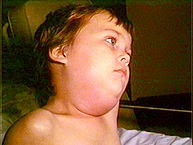

. Licensed under Public domain via Wikimedia Commons - http://commons.wikimedia.org/wiki/File:RougeoleDP.jpg#mediaviewer/File:RougeoleDP.jpg)


